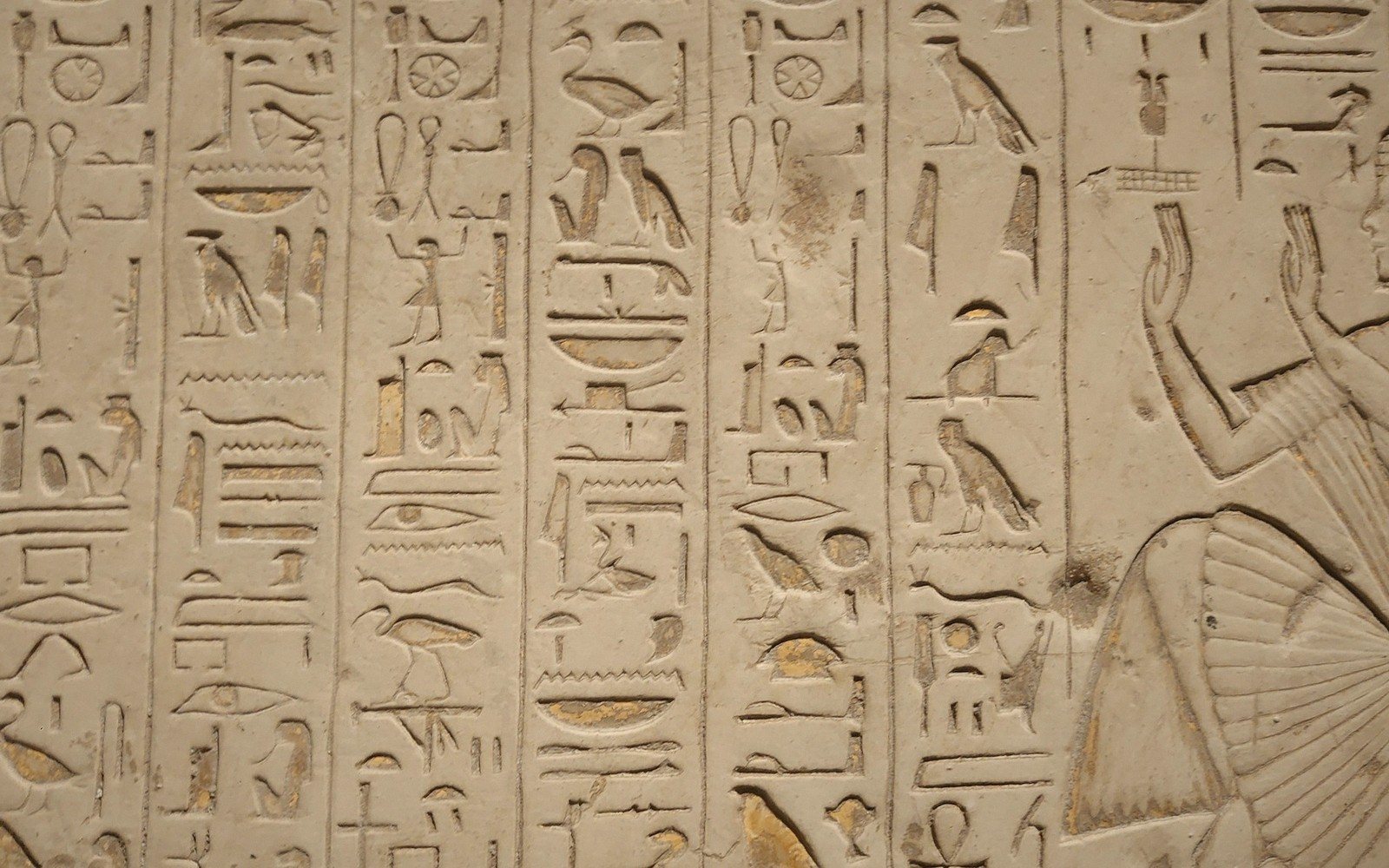
You don't need to read Ancient Egyptian — you only need to recognise a handful of signs to identify a pharaoh on any temple wall.
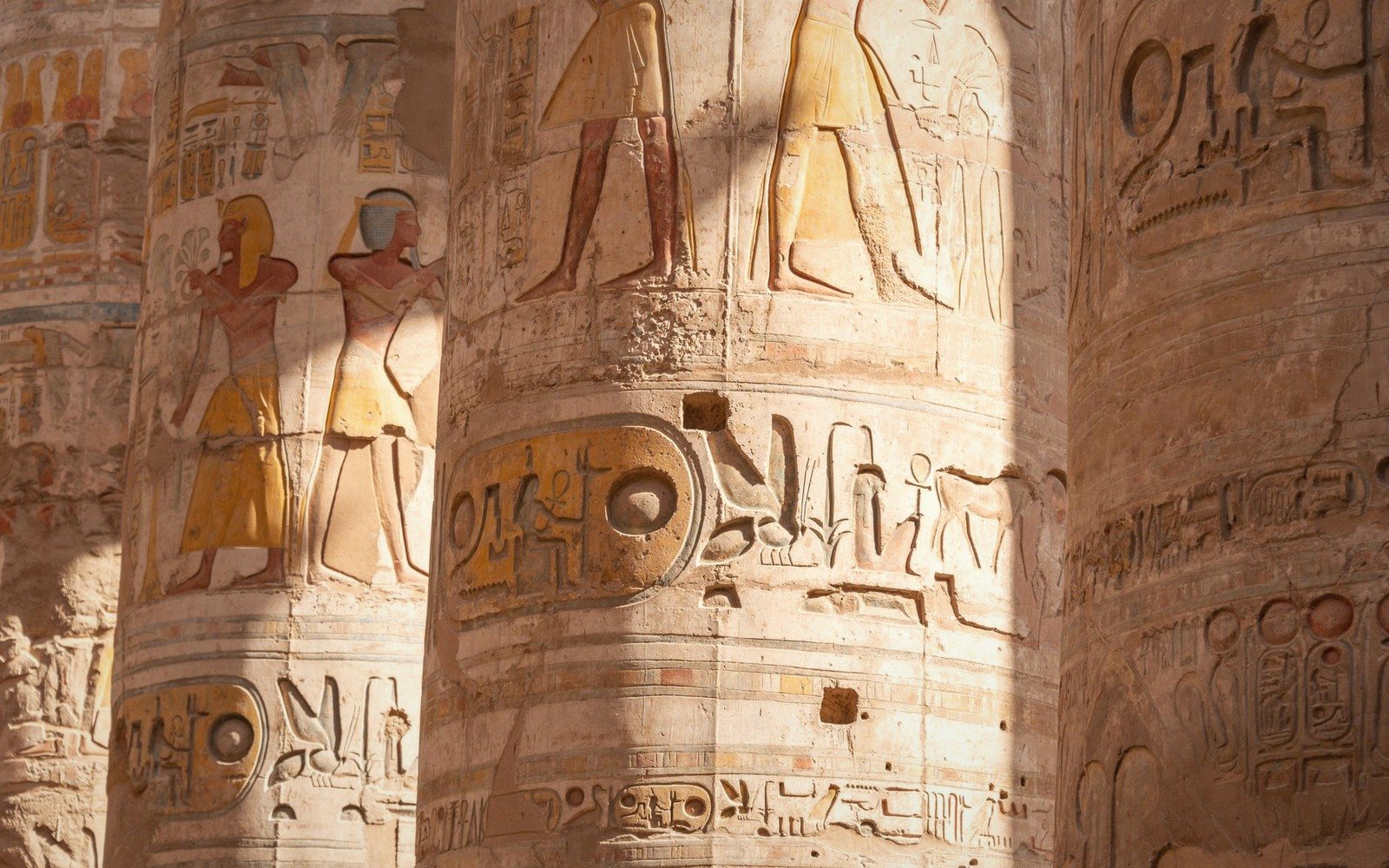
A cartouche is an oval loop of rope, tied at the bottom, enclosing the signs that spell a royal name. Any time you see that shape on a wall — carved in relief, painted, inlaid in faience — a king's name is inside it. Nothing else gets this treatment. Spotting one is the first skill; reading it comes next.1
Hieroglyphs can be written left-to-right, right-to-left, or top-to-bottom. The figures of animals and people always face toward the beginning of the line, so that tells you which direction to read. Inside a cartouche, start at whichever end lacks the knotted loop.
01A Short Alphabet Lesson
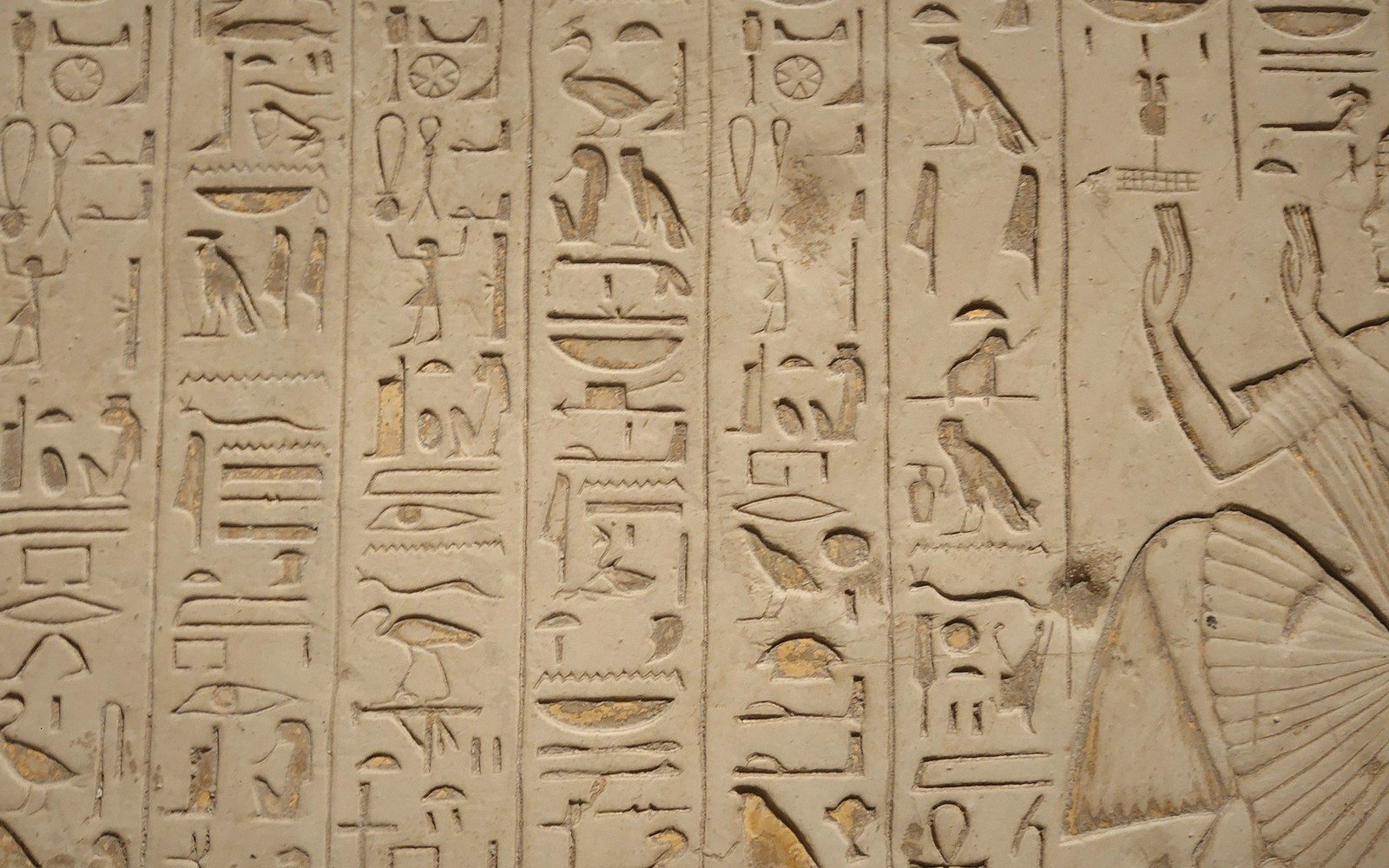
Egyptian writing mixes single-consonant signs (the nearest thing to an alphabet), multi-consonant signs, and determinatives — silent classifiers that tell you what category a word belongs to. For reading royal names, you mainly need the single-consonant signs. A few are unmissable:
Even at Abydos, where the famous king list lines an entire corridor, each oval frames a name you can now begin to sound out.
- The sun disc (ra) appears in an enormous number of names — Ramesses, Neferirkare and Menkaure all contain it.
- The owl reads m, the horned viper reads f, the mouth reads r, the hand reads d, the basket with handle reads k.
- The seated god determinative — a figure on a throne — appears at the end of a divine name and is not pronounced.
Armed with ra, ms (the birth sign), and s (folded cloth), you can already parse Ra-ms-ss: Ramesses.2
02Trying It on the Wall
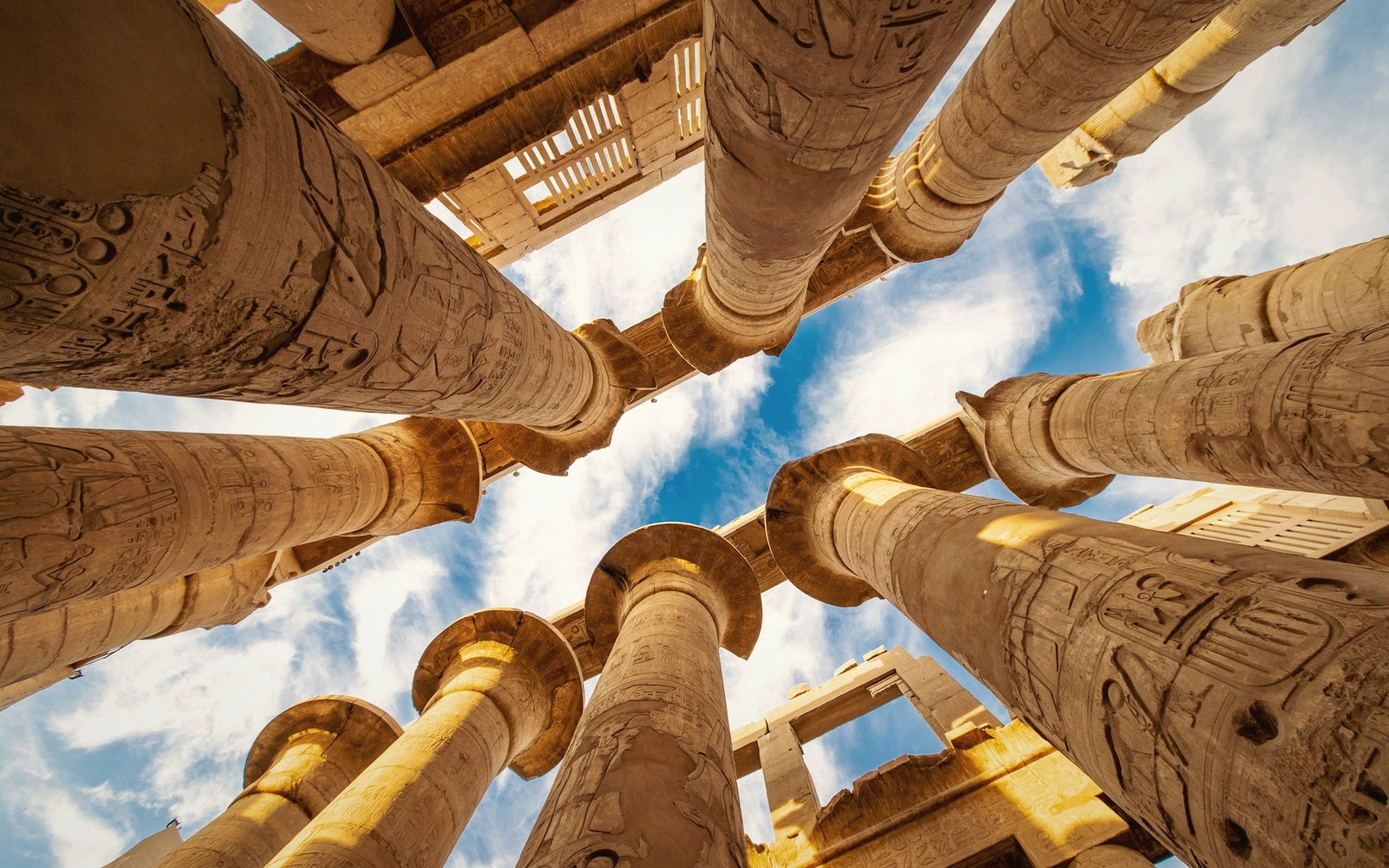
At Karnak, Ramesses II's cartouches appear so frequently — inserted into older reliefs, added to columns, stamped onto blocks — that Egyptologists sometimes joke the temple became his business card. At Abu Simbel the cartouches are colossal, cut deeper than your hand. Even at Abydos, where the famous king list lines an entire corridor, each oval frames a name you can now begin to sound out.
You will not read full sentences on your first visit. You will, however, stop in front of a column, trace the loop with your eye, and correctly name the king. That is not a small thing.
Chronology
- Old Kingdom onwardcartouche in continuous use to denote royal names
- c. 1279–1213 BCEreign of Ramesses II, most prolifically cartouched pharaoh
Named in this guide
Ramesses II (pharaoh)
New Kingdom ruler whose name and cartouches appear across Egypt's major temples
Karnak (place)
vast temple complex at Luxor, saturated with Ramesses II's cartouches
Abu Simbel (place)
rock-cut temple in Nubia with deeply carved colossal cartouches
Abydos (place)
temple site containing a corridor-length carved king list