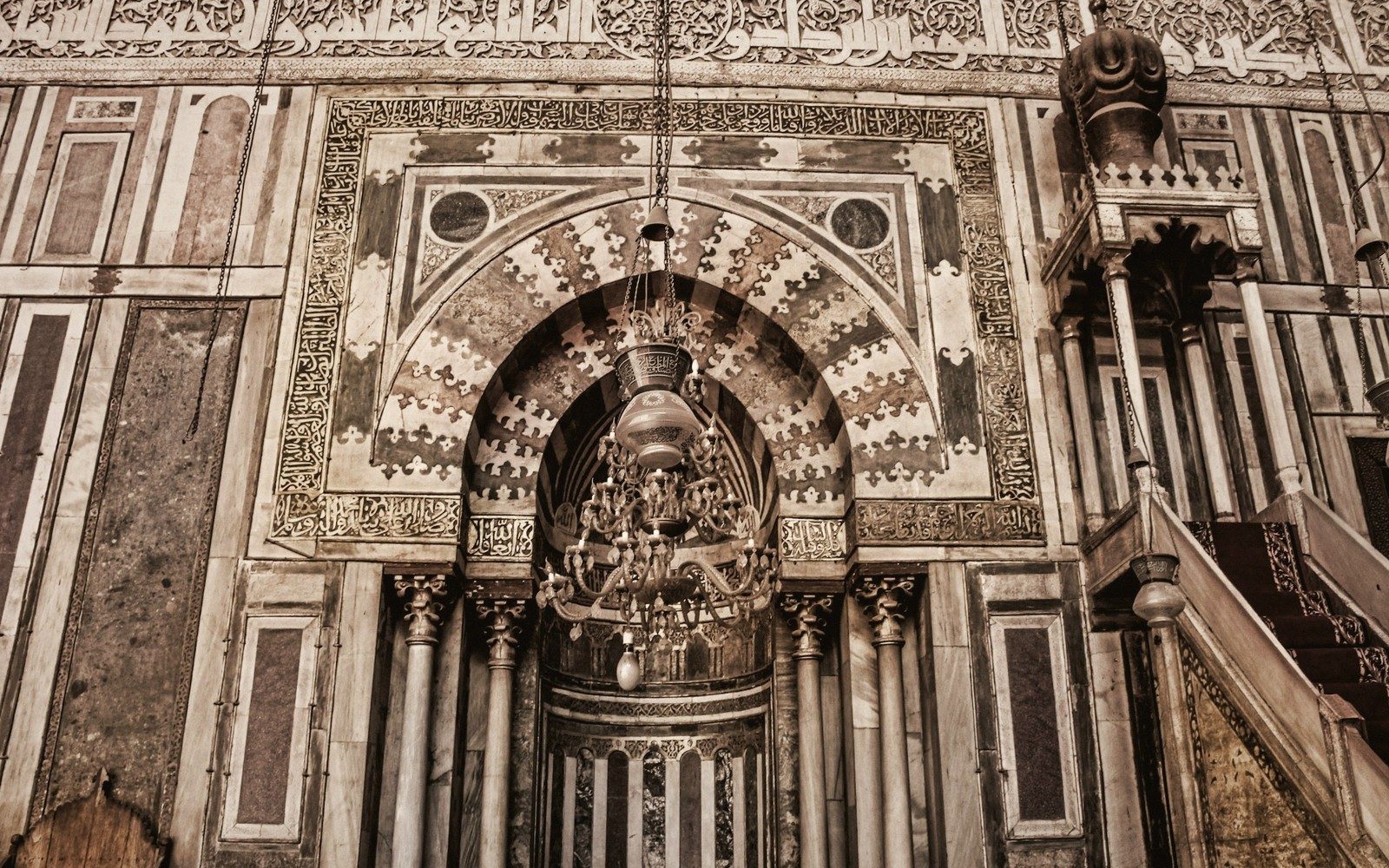
A walled enclave south of the old city, where a Roman fortress became the foundation for Egypt's oldest Christian neighbourhood.
Old Cairo — known locally as Masr al-Qadima — sits a few kilometres south of the medieval centre, and within it a compact, easily walked precinct holds some of the oldest Christian buildings in Egypt. The quarter stands on the ruins of the Roman fortress of Babylon, built in the early centuries of the Common Era to guard the Nile crossing and the road south. Its two great round towers still rise from the ground near the river, and the main entrance to the precinct passes between them, descending to a level that shows precisely how much Cairo has grown upward over the centuries.1
The churches crowd together inside a space you can cross on foot in minutes. The Hanging Church — al-Muallaqah — is the most celebrated, its nave suspended over a gatehouse of the old Roman fortifications, hence the name. The interior is dark and intricately decorated, with a pulpit of marble inlay that dates to the eleventh century. Nearby, the Church of Saints Sergius and Bacchus occupies a crypt where Coptic tradition holds that the Holy Family sheltered during the flight into Egypt; the archaeology is uncertain, but the space is ancient. The Church of Saint Barbara, at the far end of the enclave, houses some of the finest medieval Coptic woodwork in the city.
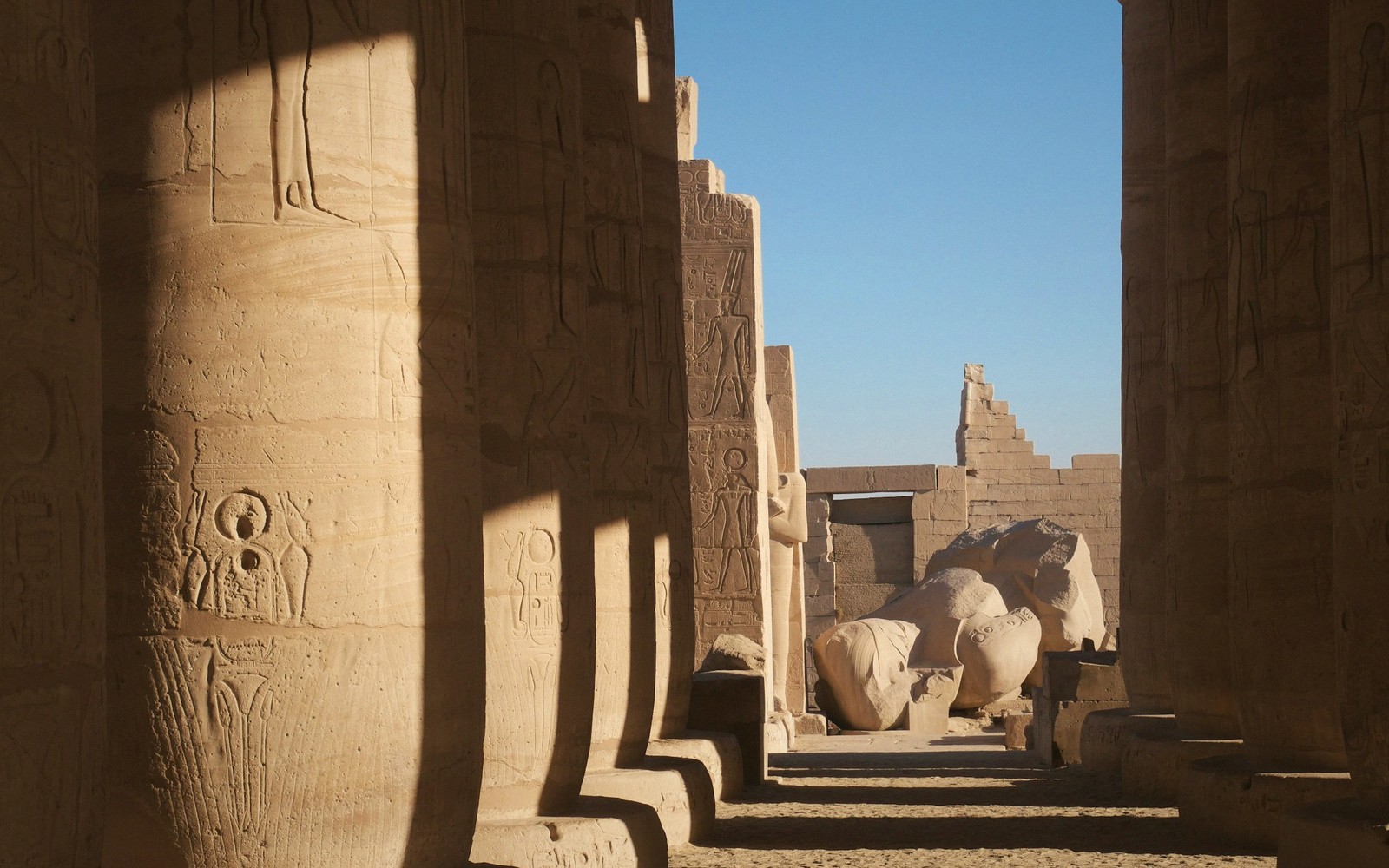
Less expected, and easy to miss, is the Ben Ezra Synagogue — one of the oldest in Egypt. In the late nineteenth century its storeroom yielded the Cairo Geniza, a vast cache of discarded documents that has since transformed scholars' understanding of medieval Mediterranean trade, daily life and Jewish liturgical history. The building is carefully restored and open to visitors.2
Less expected, and easy to miss, is the Ben Ezra Synagogue — one of the oldest in Egypt.
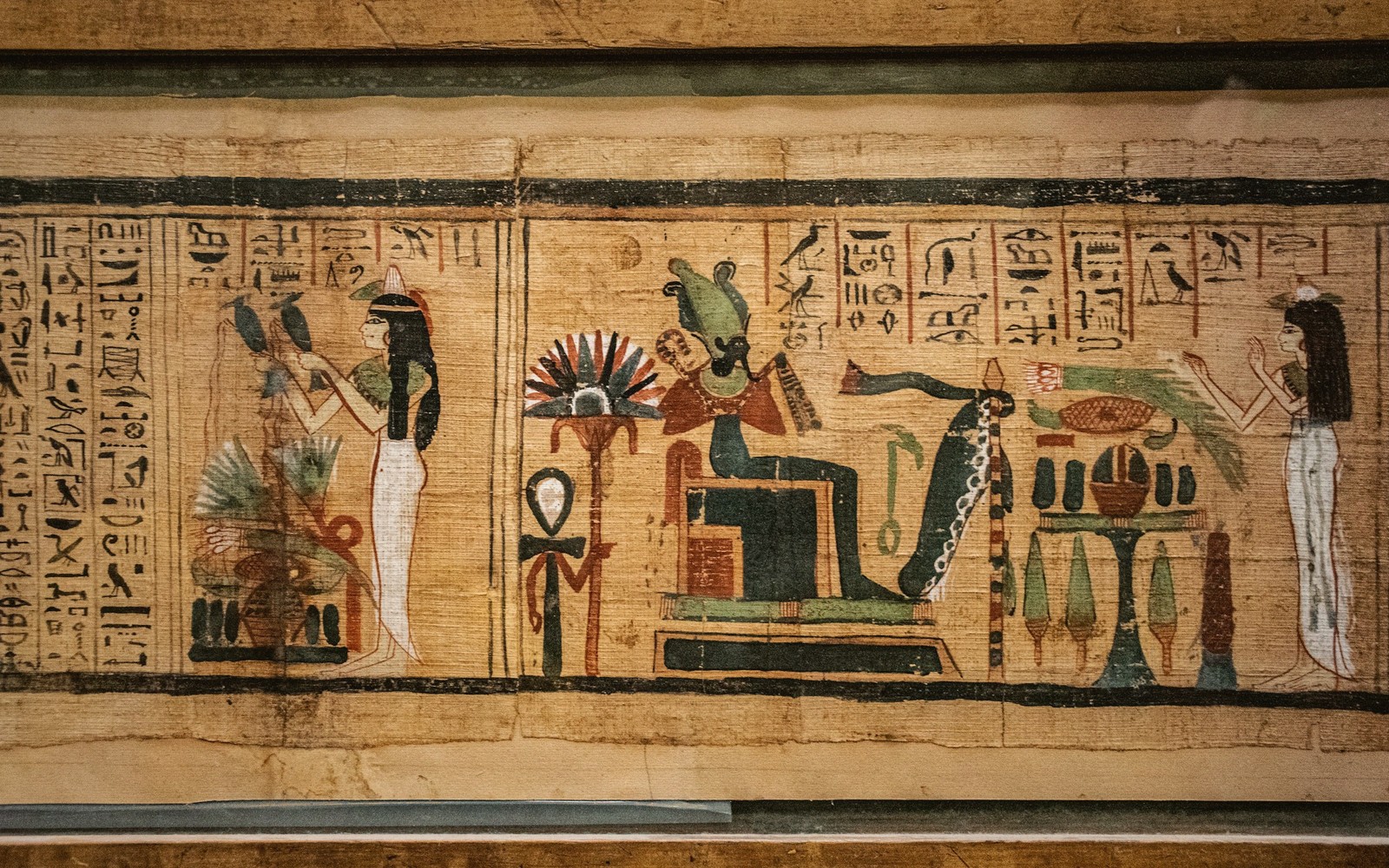
The Coptic Museum, founded in the early twentieth century, sits at the heart of the quarter and holds the world's foremost collection of Coptic art: textiles, icons, carved stonework and manuscripts spanning roughly the fourth to the fourteenth centuries. It is an essential stop, and one that rewards a deliberate, unhurried visit — see How to Use the Museums for practical guidance.
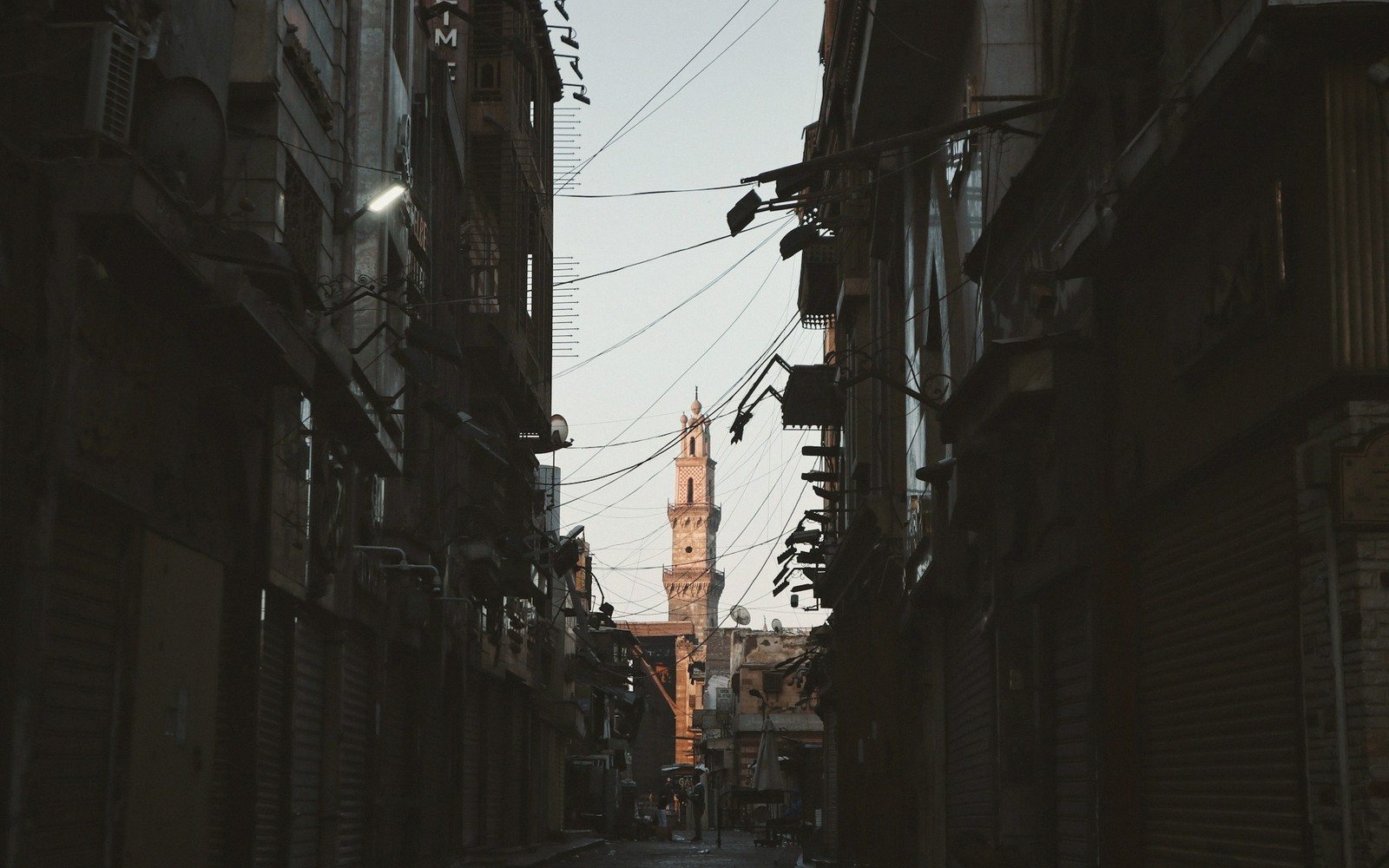
The narrow streets between the churches are quieter than almost anywhere else in Cairo: stone pavements, high walls, souvenir sellers who are easily ignored. A morning is sufficient to see everything. Come on a weekday if you can; weekends draw large numbers of visitors and the precinct's intimacy quickly disappears into the crowd.
Chronology
- Early Common EraRoman fortress of Babylon constructed
- 19th century (late)Cairo Geniza discovered in Ben Ezra Synagogue
- Early 20th centuryCoptic Museum founded
Named in this guide
Babylon (fortress)
Roman military installation whose towers and gatehouses underlie the quarter
al-Muallaqah (Hanging Church)
Cairo's most famous Coptic church, nave suspended over a Roman gatehouse
Ben Ezra Synagogue
restored medieval synagogue; source of the Cairo Geniza
Coptic Museum
holds world's foremost collection of Coptic art and manuscripts