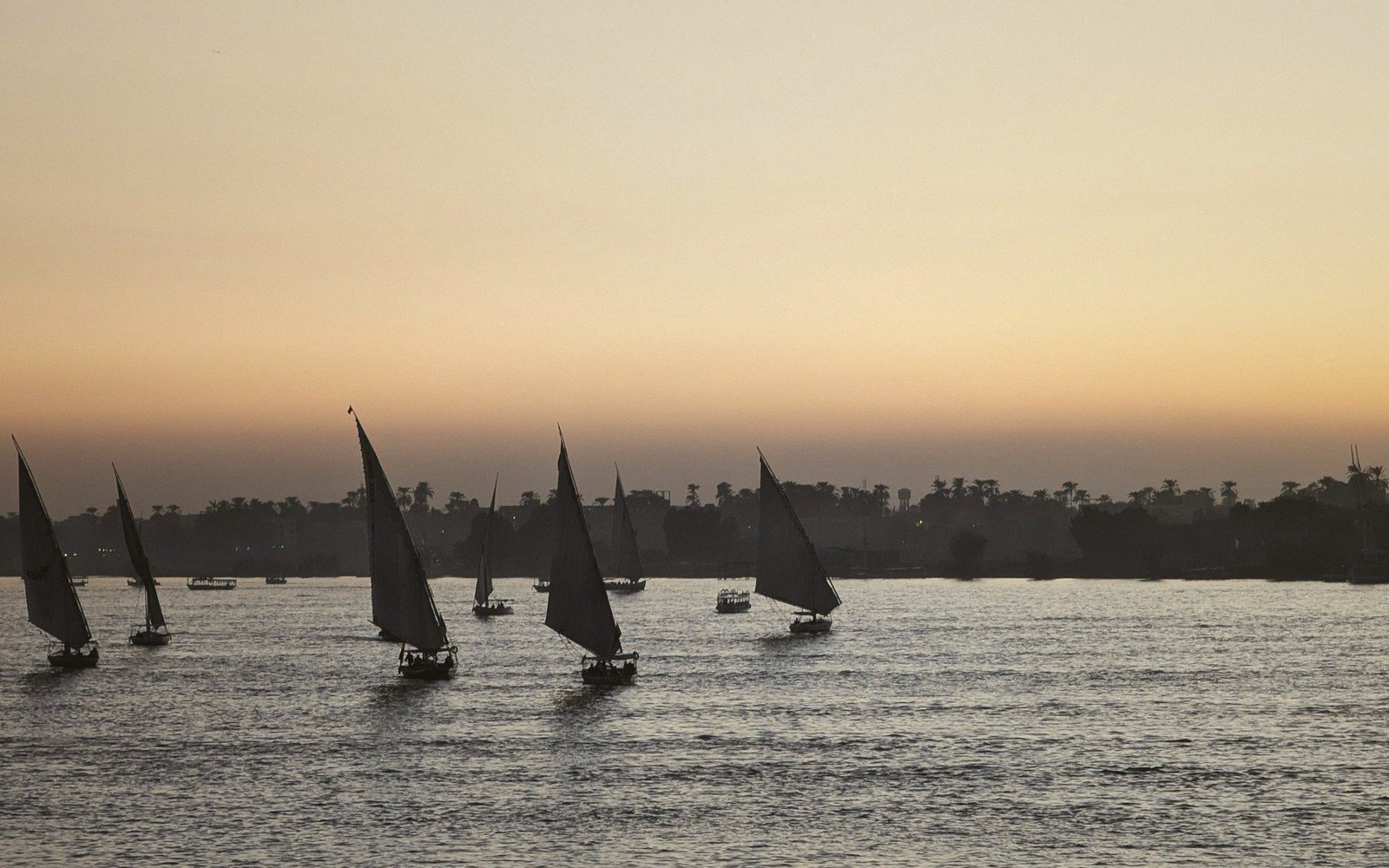
The Nile between Luxor and Aswan is still most naturally understood as a journey, not a series of stops.
The 200-kilometre stretch between Luxor and Aswan is the most visited corridor of the ancient world for good reason: Karnak, the Valley of the Kings, Edfu and Kom Ombo all fall within its gravitational pull. The sites are on the land, but the logic connecting them is the water.1
Cruise boats — large, multi-deck vessels carrying anywhere from forty to several hundred passengers — work a fixed circuit, typically three or four nights in each direction. They moor in convoy at Edfu and Kom Ombo, buses ferry passengers to the temple gates, and the rhythm is efficient if not intimate. Air-conditioning and onboard meals insulate you from the climate, which is the point in summer and arguably a pity in winter, when the valley light is extraordinary and temperatures are mild enough to want to be outside.
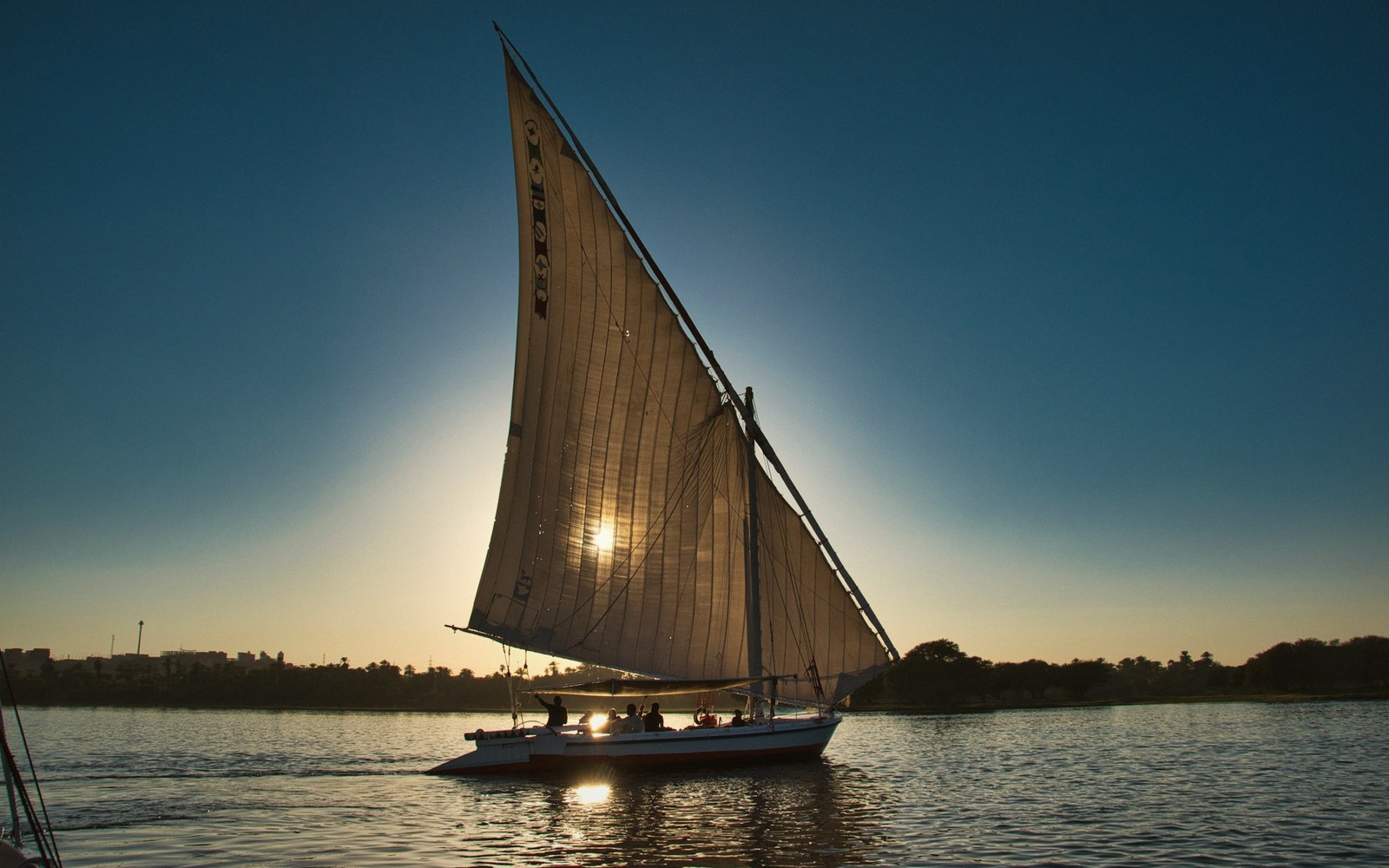
Feluccas offer the opposite contract. These single-masted wooden sailing boats have worked the Nile for centuries in essentially the same form: a broad, shallow hull, a long lateen yard and a crew of one or two. Hiring one for two or three days between Aswan and Edfu is the slowest sane way to travel the river, and for many people the most memorable. Progress depends on the wind, which generally blows north-to-south against the current — the same natural engine that let ancient Egyptians sail upstream and drift down. Nights are spent moored at a sandbank or a small village quay. There is no shower and no menu.2
These single-masted wooden sailing boats have worked the Nile for centuries in essentially the same form: a broad, shallow hull, a long lateen yard and a crew of one or two.
| Felucca | Dahabiya | Cruise boat | |
|---|---|---|---|
| Rig | Single mast, lateen sail | Motor-sail houseboat | Motor |
| Company | Open deck, few aboard | Roughly eight to twelve guests | Forty to several hundred |
| Pace | Wind and current | Short hops, quiet moorings | Fixed circuit of the main temples |
Between those extremes sit the dahabiyas: smaller, traditionally styled motor-sail boats, often beautifully fitted out, carrying eight to twelve guests. They move on a looser schedule, can moor where a cruise ship cannot and restore some of the deliberate, river-centred pace that characterised Nile travel before the age of asphalt roads and domestic flights.
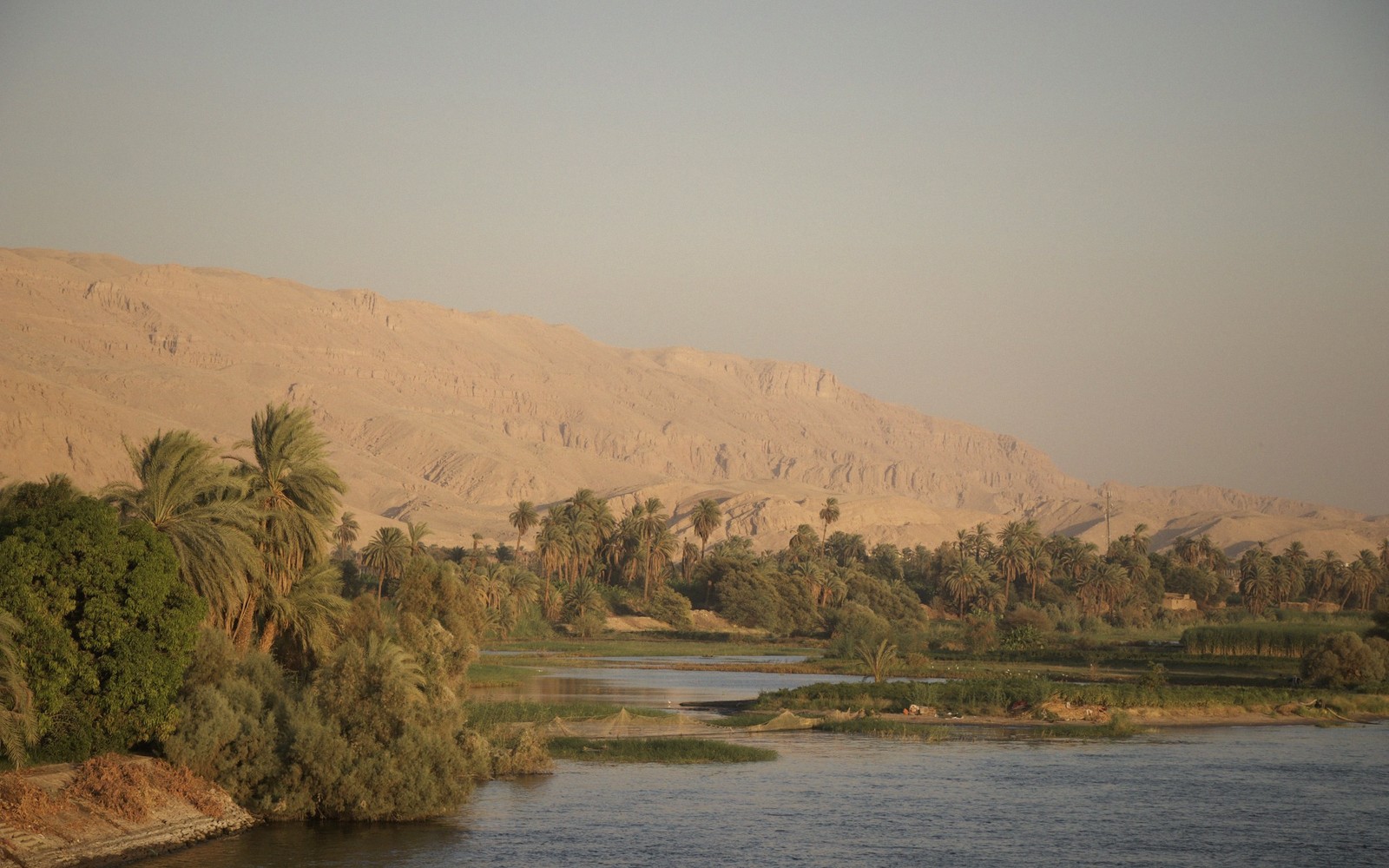
Whichever vessel you choose, the experience is structured by the same geography it always was: the narrow green strip of cultivation, the desert cliffs behind, the light changing from gold to white as the morning burns off. The river has not changed. The way it frames everything else — the distance between temples, the scale of the plateau, the sudden appearance of a pylon above the palms — is exactly what it was designed to do.
Named in this guide
Edfu
home of the Temple of Horus, major stop on the Luxor–Aswan cruise circuit
Kom Ombo
double temple shared by Sobek and Haroeris, overlooking the river
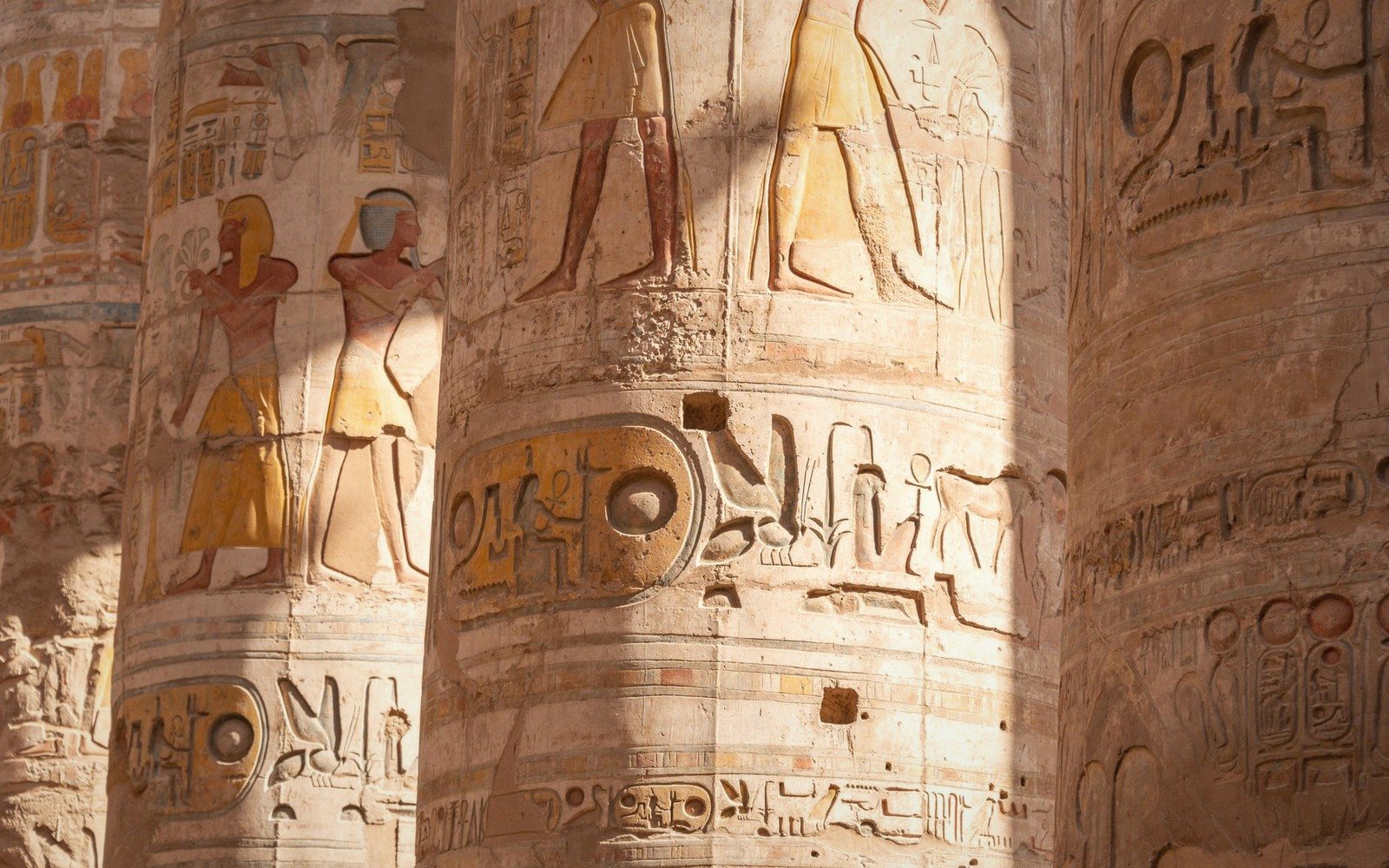
Karnak
vast temple complex at Luxor, northern anchor of the cruise corridor