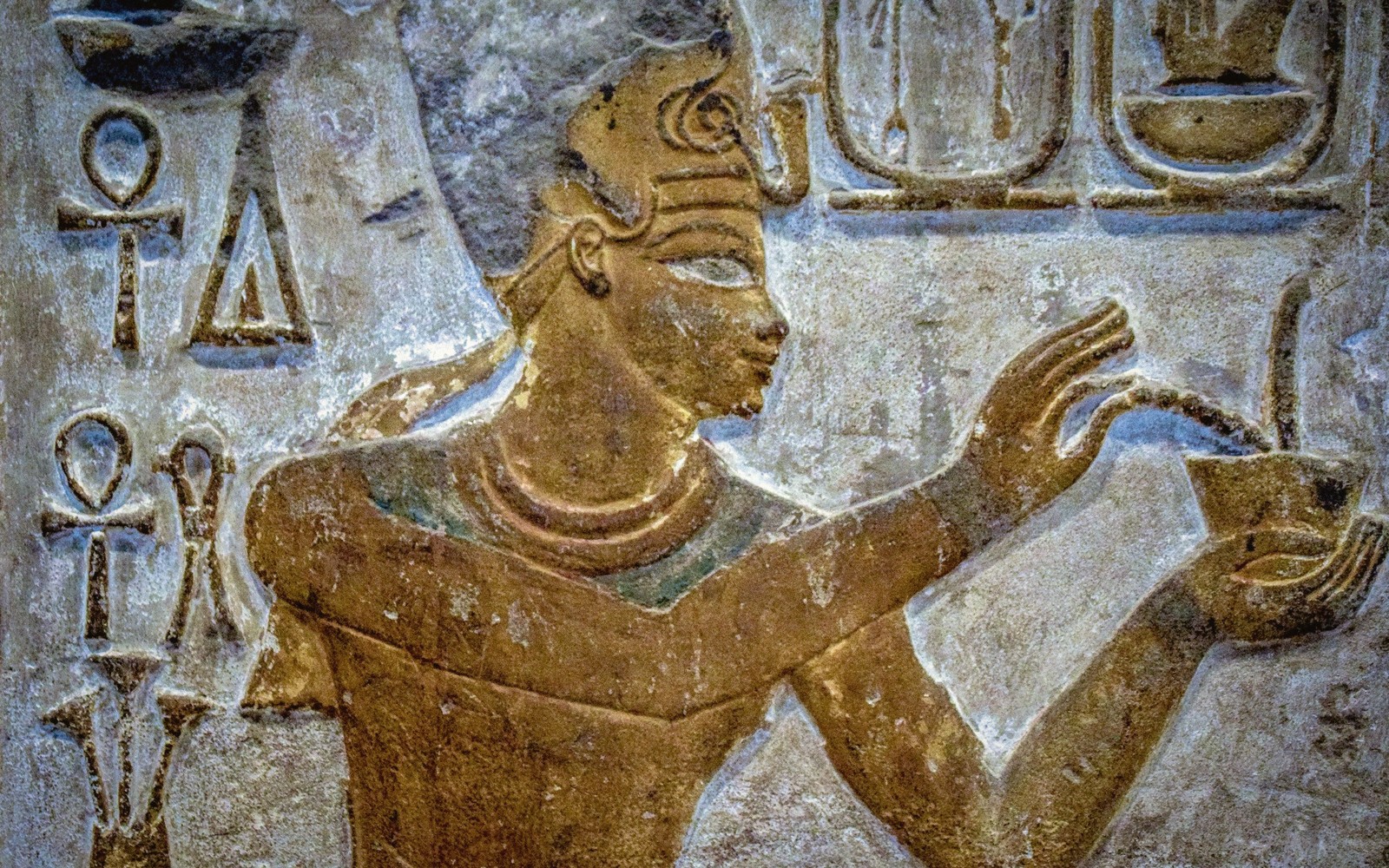
A wall in the desert holds the most orderly roll-call of pharaohs ever carved — and its gaps are as revealing as its names.
Abydos, on the west bank of the Nile roughly 160 km north of Luxor, was Egypt's most sacred city — the traditional burial ground of Osiris and a place of pilgrimage from the earliest dynasties onward. The temple built here by Seti I in the Nineteenth Dynasty is among the best-preserved in Egypt, and one of the most atmospheric: its painted reliefs retain extraordinary colour, and its seven sanctuaries, each dedicated to a different deity, run in a line behind an unusually wide hypostyle hall.1
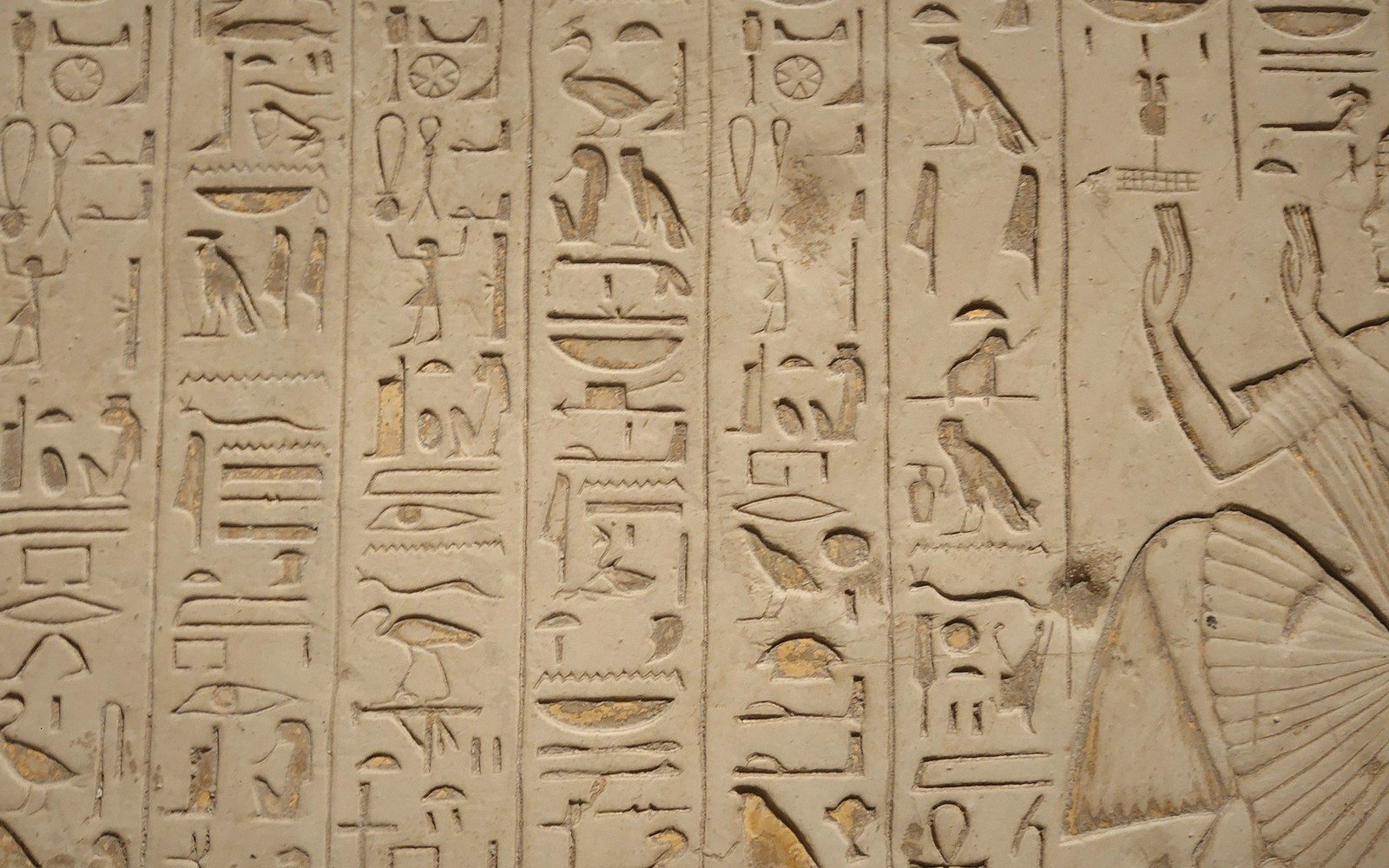
Near the back of the complex, in a corridor now known as the Gallery of Lists, Seti I had himself depicted making offerings before a long register of cartouches — the oval loops that enclose royal names in hieroglyphs. His son Ramesses II, still a prince at the time, stands alongside him. The list names seventy-six kings, arranged in three rows, running from the earliest rulers of a united Egypt down to Seti himself.2
The list names seventy-six kings, arranged in three rows, running from the earliest rulers of a united Egypt down to Seti himself.
01What the List Tells Us — and What It Withholds
For Egyptologists, the Abydos King List is both treasure and puzzle. It provided the first firm evidence for the sequence and spelling of many royal names, and it remains a cross-reference against later sources — including the Turin King List, a papyrus now in Turin, and the slightly different version carved at Karnak. But the list is not neutral history: it is ritual legitimacy. Several rulers are simply absent — among them Hatshepsut, Akhenaten and the Amarna-period kings, all of whom had been deliberately excised from official memory. The list tells us who Seti I wished to claim as ancestors, not every pharaoh who actually reigned.
A second, shorter list survives at Abydos in the nearby temple of Ramesses II, and a third at Karnak. Read together, the absences across all three say almost as much as the names themselves.
Chronology
- Nineteenth Dynastyperiod when Seti I built the Abydos temple and commissioned the King List
Named in this guide
Seti I
Nineteenth Dynasty pharaoh who built the principal Abydos temple
Ramesses II
son of Seti I; depicted beside him in the King List corridor; built a second temple at Abydos
Abydos
ancient cult city on the Nile's west bank, sacred to Osiris
Turin King List
papyrus in Turin listing Egyptian kings; a key parallel source