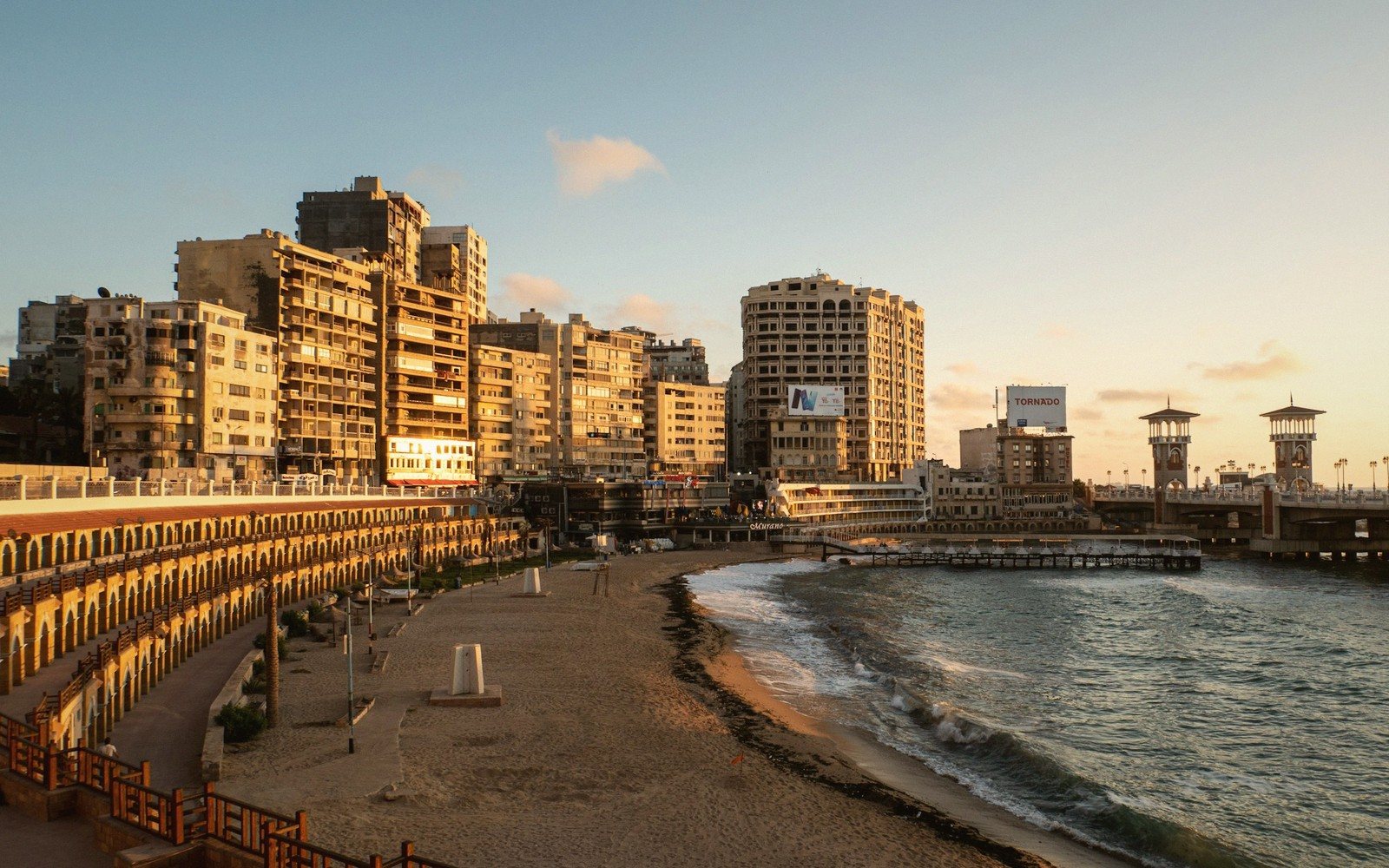
The most storied city on the Mediterranean has lost almost everything — and remains, despite that, unmissable.
Alexandria was founded in 331 BCE by Alexander the Great, who chose a narrow strip of land between the sea and Lake Mariout with the eye of someone who understood harbours, trade winds and imperial symbolism all at once. Within a generation it had become the capital of Ptolemaic Egypt, the largest city in the Greek-speaking world and, by most ancient accounts, the most magnificent. The Royal Quarter occupied the northeastern point of the peninsula. The Heptastadion — a man-made causeway seven stadia long — connected the mainland to the island of Pharos, creating two great harbours. At the tip of Pharos stood the lighthouse, one of the Seven Wonders of the ancient world, probably somewhere between 100 and 130 metres tall. It guided ships into port for well over a thousand years before earthquakes brought it down in the medieval period.
Almost none of this survives above ground. Earthquakes, rising sea levels and relentless rebuilding have seen to that. The Royal Quarter lies mostly under water in the Eastern Harbour, where Egyptian and French underwater archaeologists have been recovering column drums, sphinxes and statue fragments from the seabed since the 1990s. The lighthouse foundations are believed to lie beneath the Citadel of Qaitbay, a fifteenth-century Mamluk fortress that itself used ancient stone in its construction. You can visit the citadel and look out to sea from the exact promontory that once held the wonder. That palimpsest — one monument eating another — is essentially the Alexandria experience.1
The great Library, the Mouseion, the Serapeum: all gone, at least in their original form. The Bibliotheca Alexandrina, a modern institution opened in 2002 on or near the site of the ancient Library, makes an honest attempt to honour the tradition. Its architecture is striking — a tilted disc clad in Aswan granite, inscribed with letters from every known script — and it houses a serious research library, four museums and a planetarium. As a piece of contemporary architecture engaging thoughtfully with an ancient idea, it earns a visit; as the ancient Library, it makes no such claim.
01What Does Survive
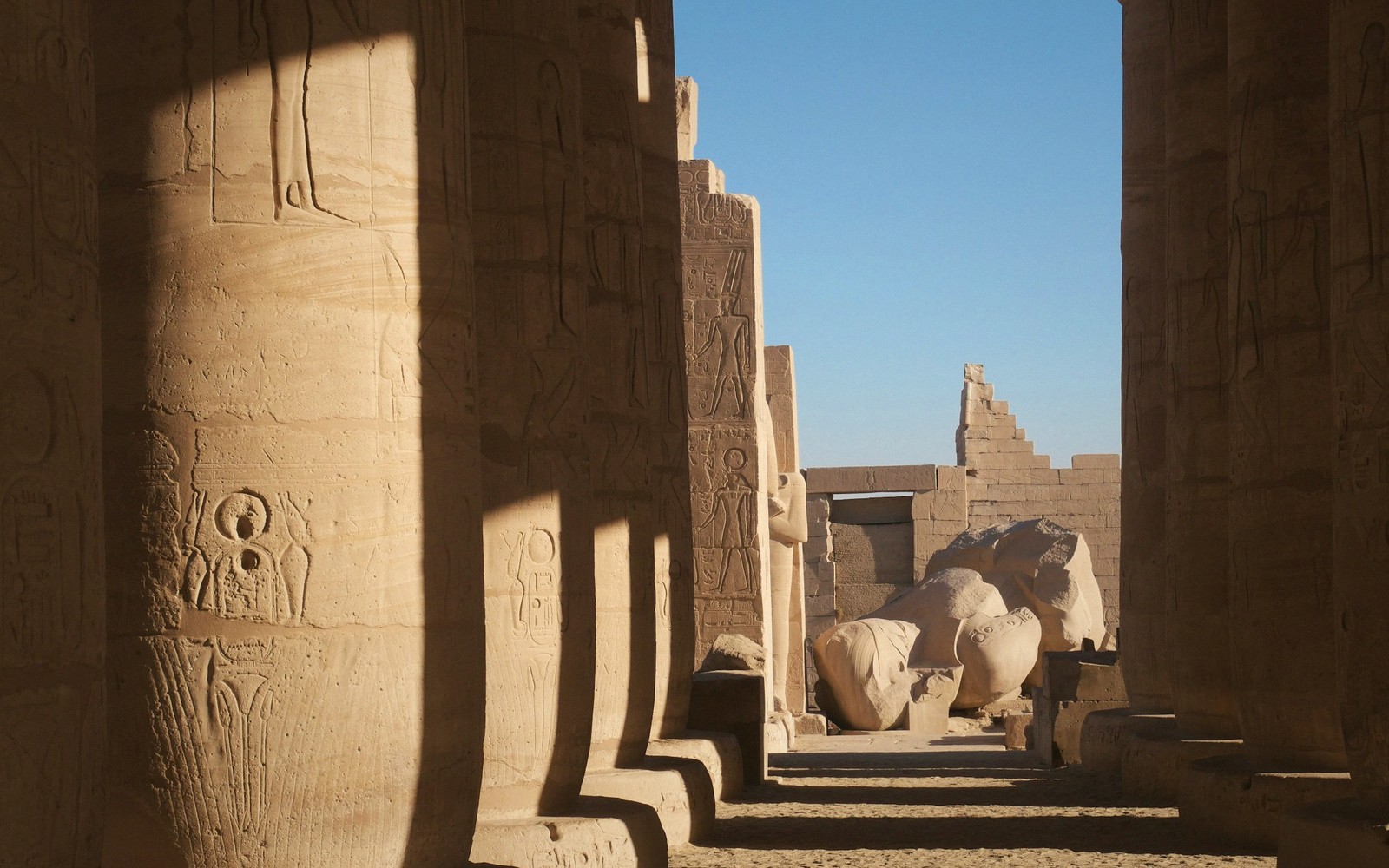
The city rewards the visitor who adjusts expectations. The Greco-Roman Museum, when it returns from an extended restoration, houses one of the best collections of Ptolemaic and Roman-period material in the country: tanagra figurines, portrait busts, mummy portraits of startling psychological immediacy and coins that trace the slow Egyptianisation of the Ptolemaic rulers. Confirm it is open before visiting, as its restoration has been protracted.
Confirm it is open before visiting, as its restoration has been protracted.
For genuine standing remains, Pompey's Pillar is the most substantial single monument in the city — and immediately misnamed. The column has nothing to do with Pompey. It is a red Aswan granite column nearly 27 metres tall, raised in honour of the emperor Diocletian around 297 CE, and it stands in the precinct of what was once the Serapeum, the great temple of Serapis that combined Egyptian and Greek religious traditions into a single imperial cult. The base is surrounded by fragments of sphinxes, and in antiquity the surrounding complex was large enough to have held a branch of the Library. What remains is the column, a few sphinxes, and underground chambers — the Serapeum's subterranean galleries — that once stored sacred animals or ritual objects. It is quiet here, and the scale of the column, seen up close, is genuinely impressive.2
Beneath the residential neighbourhood of Kom el-Shoqafa, a ten-minute drive away, the catacombs are the city's most atmospheric site. Cut into the rock in the second century CE, they descend through three tiers and were in continuous use as a burial place across several generations. The decoration is the point: hybrid figures that fuse Egyptian funerary imagery — the jackal-headed Anubis, the winged solar disc, the canopic arrangement — with Roman architectural framing and Greek sculptural style. Nowhere else makes the blending of cultures that defined Alexandrian life so legible. The catacombs were rediscovered in 1900 when a donkey fell through the ground above them.
The Montazah gardens and the Eastern Harbour corniche offer a different register: the Mediterranean itself, the sea air, the nineteenth- and early twentieth-century buildings that give modern Alexandria much of its surviving elegance. The city's Alexandrian Greek, Jewish and Italian communities, largely gone since the mid-twentieth century, left behind an architectural fabric of apartment buildings, cinemas and coffee houses that is visibly fading but still gives the city a personality entirely different from Cairo.
Travellers arriving by train from Cairo cross the Nile Delta for the final stretch — flat, impossibly green, laced with irrigation channels — before the line curves north toward the sea. That transition is itself instructive. Egypt does not feel like one country at its two extremes; Alexandria has always looked north, toward the Mediterranean world, while the Nile valley looks inward along its own long axis. The city's tragedy and its peculiar attraction are the same thing: it held more than almost anywhere, and kept almost nothing. What survives is enough.
Chronology
- 331 BCEAlexandria founded by Alexander the Great
- c. 297 CEDiocletian column raised in the Serapeum precinct
- Second century CEKom el-Shoqafa catacombs constructed
- Medieval periodPharos lighthouse destroyed by earthquakes
- Fifteenth centuryMamluk Citadel of Qaitbay built on Pharos promontory
- 1900Kom el-Shoqafa catacombs rediscovered
- 1990sunderwater archaeology begins recovering ancient remains from Eastern Harbour
- 2002Bibliotheca Alexandrina opened
Named in this guide
Alexander the Great
Macedonian king who founded Alexandria in 331 BCE
Ptolemaic dynasty
Greek royal line that ruled Egypt from Alexandria after Alexander's death
Diocletian
Roman emperor in whose honour the great column was raised
Pharos
island connected to Alexandria by the Heptastadion; site of the ancient lighthouse